
Many employers assume they are fully in control of their Employee Benefit decisions. The reality is that a significant amount of influence sits with the Employee Benefits broker, often more than employers realize. This is not because employers lack expertise or interest. It is because the structure of the brokerage industry creates dynamics that shape the options an employer sees and the strategy they believe they have. See diagram below:
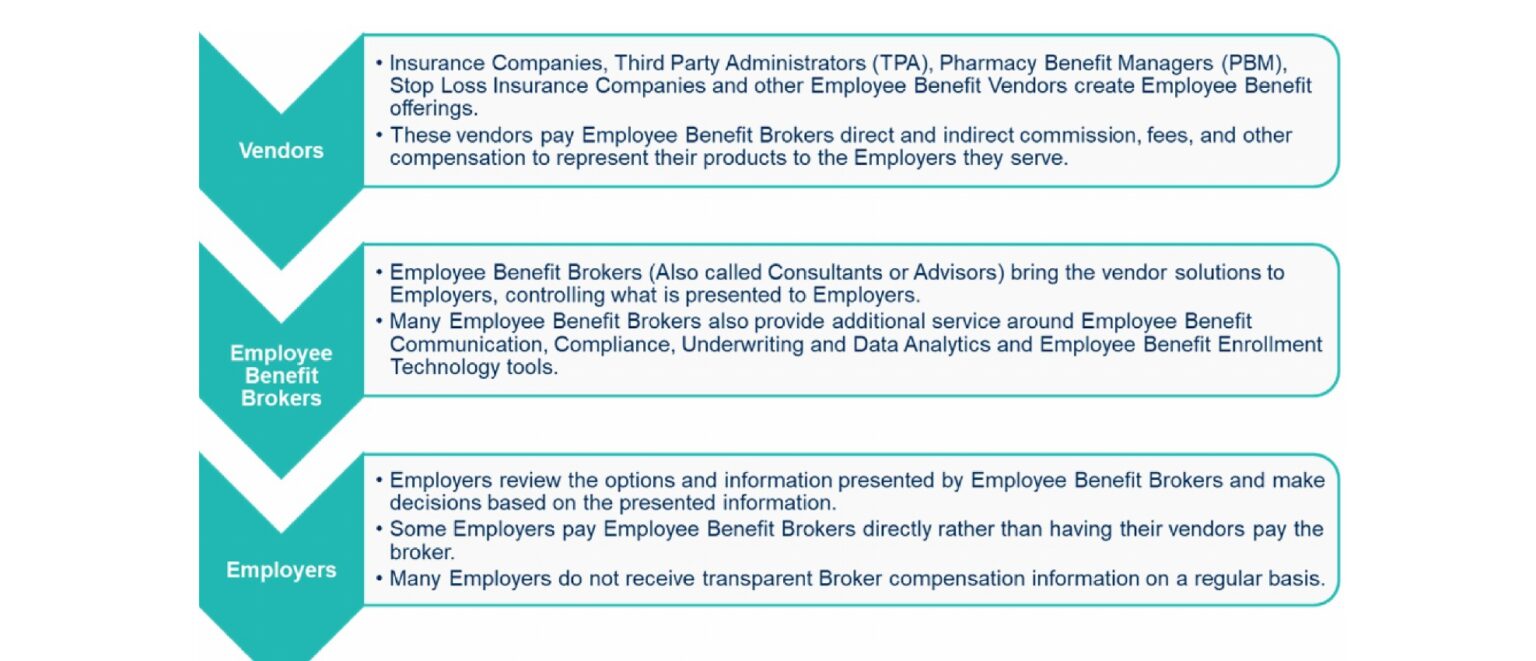
How Brokerage Appointments Shape Strategy
Most brokers are appointed by the insurance companies and the vendors they bring forward. Many brokers also receive incentive (indirect) compensation from insurance carriers for retaining business. These retention bonuses (called overrides) can create a conflict of interest and may cloud a broker’s ability to recommend changes that are truly in the employer’s best interest. While this model is common across the industry, it can shift the balance of decision-making power away from the employer and toward the vendors.
This is why evaluating your broker’s scope of services and their alignment with your interests is so important. A broker should be more than a conduit between you and an insurance carrier or vendor. They should be a strategic partner who helps you build a long-term plan, identify cost drivers, evaluate alternatives, and support a benefits strategy that advances your organization’s objectives.
What a Broker Relationship Should Include
If your renewal process feels like an annual transaction instead of a year-round strategy, it may be a sign that your broker relationship needs a closer look. The most effective employer and broker partnerships are built on transparency, proactive communication, and a clear understanding of how the broker is compensated for their work. Employers deserve to know whether their broker is limited in the vendors they can present, how they are paid by those vendors, and whether incentive compensation is influencing the guidance they provide. Employers also deserve to know what their broker is doing throughout the year to earn that compensation.
A strong broker relationship should include data-driven guidance, negotiation support, insights on emerging funding strategies, and ongoing benchmarking. It should also include a thoughtful approach to vendor selection that prioritizes the employer’s goals rather than the vendor’s preferences. When a broker operates independently of carrier appointments and compensation incentives, the employer gains a broader view of their options and a clearer path to building a sustainable benefits plan.
Independent Resources to Support Evaluation
If you need a resource in evaluating your broker, you can leverage the tools created by the Nautilus Health Institute. Nautilus is a 501(c)(3) non-profit organization with an ambitious mission to transform health plan market norms in procurement, contracting, and data use by 2030.
Health Rosetta is an organization and movement founded by Dave Chase to transform the American healthcare system by lowering costs (by 20-40%) and improving care quality. It serves as a blueprint and ecosystem for employers and advisors to implement high-performance, sustainable benefits programs.
As a sponsor of HRAM, The Kirsch Group is committed to helping employers rethink what they should expect from their Employee Benefits broker. Choosing a broker is an important decision and one that should be evaluated on a regular cadence. The right broker can be an invaluable strategic partner. The wrong one can limit your visibility, restrict your choices, and prevent you from managing long-term costs effectively. The biggest risk is that broker compensation becomes inflated which can lead to risk around the fiduciary responsibility employers have.
In the months ahead, we will continue to share insights designed to help HR leaders strengthen their Employee Benefits strategy and gain more clarity in an increasingly complex market. If you would like to discuss how to better evaluate broker effectiveness, compensation models, or vendor relationships, our team can help.
* Disclaimer: There is no affiliation between HRAM and the sponsor of this advertisement. The content of this advertisement does not reflect the views of HRAM. HRAM specifically disclaims all responsibility and liability for the content of this advertisement and accepts no responsibility for the content of this advertisement.

About Cara Kirsch
Cara Kirsch is the Founder of The Kirsch Group with nearly 30 years of experience helping employers with employee benefits, insurance planning, and smarter long-term solutions.
Meet Cara Kirsch