
As renewal season approaches, HR leaders and benefits committees find themselves surrounded by spreadsheets: trend reports, renewal projections, contribution models, benchmarking data, and vendor proposals. These tools are indispensable, but on their own they tend to narrow the conversation to a single metric: how much next year’s increase can be reduced.
That instinct is understandable, but it can eclipse a more consequential obligation: demonstrating that benefit decisions were reached through a prudent, documented, and participant-focused process. For employer-sponsored health plans, this is no longer theoretical: courts have begun extending the same duty of prudence long applied to retirement plans to health and welfare benefits, and litigation over excessive fees and passive vendor oversight is following. Fiduciary discipline is not about finding the cheapest option; it is about following a defensible process that balances financial stewardship with the wellbeing of employees and their families.
The Shift from Price Shopping to Fiduciary Thinking
Many renewal meetings still open with the same question: “What is our increase?” A fiduciary process begins differently, with a question that reframes the entire conversation: “What outcomes are we trying to achieve, and can we show we got there the right way?”
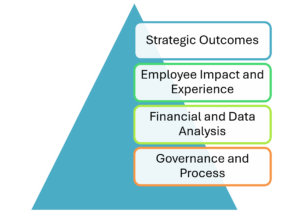
Strong benefit decisions rest on a foundation of governance and process, are informed by rigorous data and analysis, and are ultimately measured by their impact on employees and the organization they serve.
Start with Plan Objectives
Before evaluating a single plan design change, HR leaders and benefits committees should revisit the organization’s underlying objectives: affordability, competitive positioning for attraction and retention, workforce health, and long-term plan sustainability. These priorities, not the number alone, should anchor every decision that follows.
Let Data Guide the Decisions
The strongest fiduciary decisions are anchored in evidence, not assumption: claims and financial trend data, population health metrics, workforce demographics, and utilization patterns, reviewed before any solution is on the table. National benchmarks project another significant increase in employer health costs for the coming plan year. The figure matters less than whether the committee reviewed it, and its own plan’s experience against it, before a vendor conversation began.
Evaluate Decisions Through Three Lenses
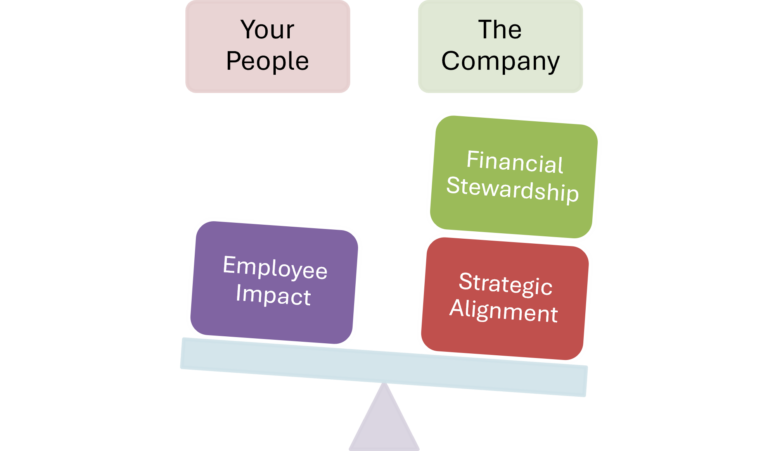
Every major renewal decision, whether it involves plan design, a carrier change, or a new point solution, should be evaluated through three lenses: financial stewardship, participant impact, and strategic alignment. Consider a common scenario: a proposal to move to a narrower pharmacy network promises a meaningful reduction in trend. Financial stewardship says yes. Participant impact asks whether members in rural or underserved communities will lose reasonable access to a pharmacy. Strategic alignment asks whether the change supports, or undermines, the organization’s stated commitment to workforce health. A fiduciary committee documents all three answers, not just the first one, before it decides.
Vendor Oversight Is a Fiduciary Responsibility
Renewal season is the natural checkpoint for vendor oversight, but it should not be the only one. Fiduciary committees should assess direct and indirect compensation, service levels, performance guarantees, reporting transparency, and the overall value each partner, from carrier to PBM to point solution, delivers relative to its cost. Renewing a vendor relationship by default, without this review, is itself a fiduciary exposure.
Document the Process, Not Just the Outcome
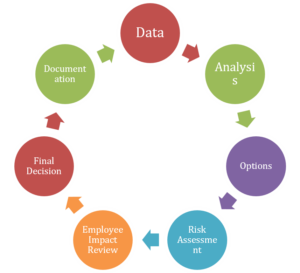
Strong documentation captures more than a final decision. It records the data reviewed, the alternatives considered and why they were set aside, the risks identified, the recommendations received from advisors and carriers, and the rationale behind the final decision. In the event of a claim, a complaint, or an audit, this record is what demonstrates that the process, not just the outcome, was sound.
Develop a Year-Round Governance Rhythm
Q1. Post-Renewal
- Debrief on what was decided and why and revisit plan objectives for the year ahead.
Q2. Vendor and Contract Review
- Broker and vendor compensation, performance guarantees, service levels, independent of any renewal decision.
Q3. Renewal Season
- The three lens-evaluation, data review, and plan design decisions
Q4. Documentation Audit
- Confirm the record (data reviewed, alternatives considered, rationale) is actually complete and defensible before year-end.
Structure the Committee, Not Just the Process
A prudent process is only as strong as the body carrying it out. Many renewal conversations are handled by an informal mix of HR staff, finance leadership, and whomever the broker invited to the table, rather than a defined fiduciary committee with named members, documented authority, and a charter describing how it decides. That structure should also meet on a regular basis, not only at renewal, and should account for its own conflicts of interest; members with a personal or department stake in a particular vendor or outcome introduce the same exposure the committee is meant to guard against elsewhere. That structure, too, belongs in the document record.
From Administrator to Strategic Steward
The most successful renewal season is not necessarily the one with the lowest rate increase. It is the one in which leadership can answer three questions with confidence: Did we review the right information? Did we weigh the interests of participants alongside the numbers? Did we follow, and can we document a prudent process?
It is never too late to put a strong fiduciary process in place, and every benefits partner should be held to that standard. If your organization has not yet documented its fiduciary process for health and welfare benefits, renewal season is the moment to start.
The Kirsch Group provides fiduciary advisory and oversight services built for this purpose, helping HR leaders and benefits committees ask the right questions, build a defensible record, and secure the best outcome for their organization and employees.
Contact The Kirsch Group to schedule a fiduciary readiness review before your next renewal.
Cara Kirsch at 402-490-6401 or via email at: ckirsch@kirschgroupins.com

About Cara Kirsch
Cara Kirsch is the Founder of The Kirsch Group with nearly 30 years of experience helping employers with employee benefits, insurance planning, and smarter long-term solutions.
Meet Cara Kirsch